
Twelve Days in Morocco: Casablanca to Marrakech, City by City
Morocco punishes a rushed itinerary more than almost anywhere. The country's magic lives in its differences: imperial capital, blue mountain town, medieval medina, pink desert city. Travelers who sprint between two of them come home with beautiful photographs of half a story.
How many days do you really need in Morocco?
Twelve is the honest number. Seven gets you two cities and a lot of driving between them, and the thing you came for, the contrast between one Morocco and the next, is exactly what gets cut.
Here is how a well-built route spends those twelve days, city by city, based on the journey we run from Casablanca to Marrakech, and why the order itself is doing quiet work.
What do you actually do in Casablanca?
You land softly. Casablanca gets dismissed as the airport city, which misses its point in a route: it is the gentle on-ramp, and the first real day asks very little of your jet lag.
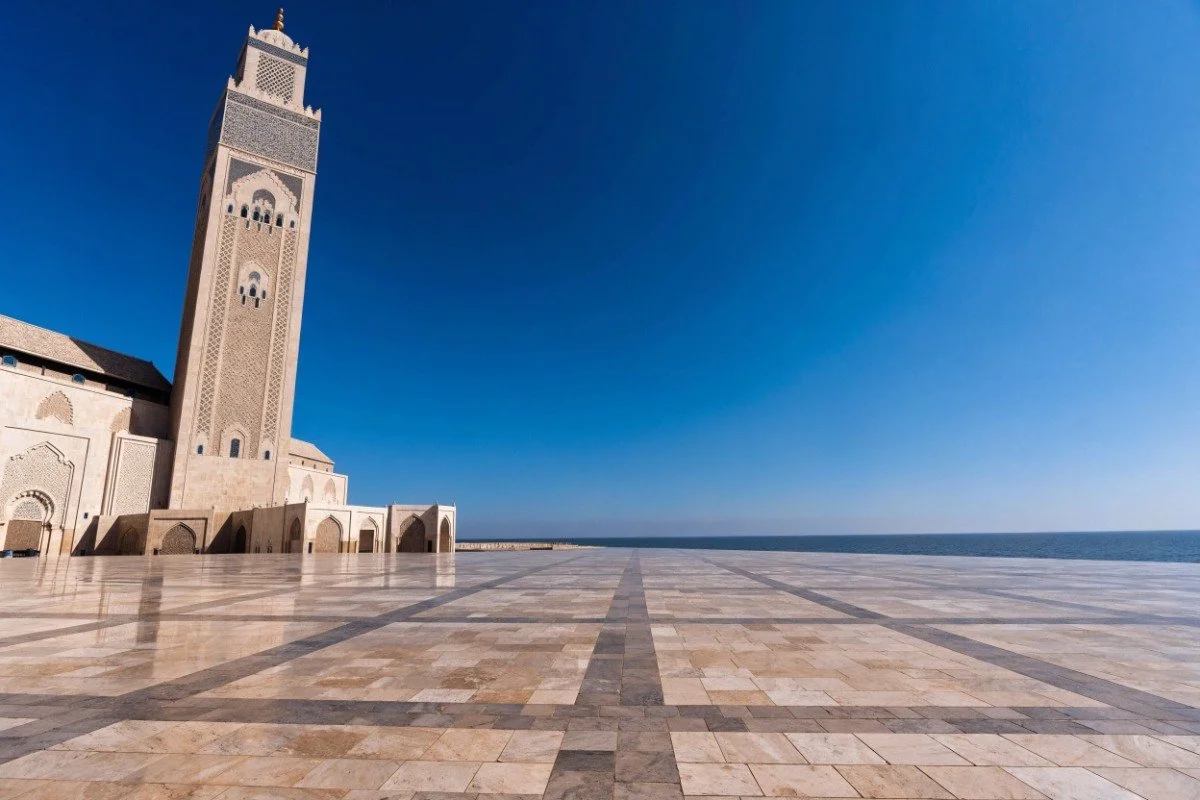
The centerpiece is the Hassan II Mosque on its platform over the Atlantic, one of the few mosques in Morocco that non-Muslim visitors may enter, with a minaret the height of a sixty-story building and an interior big enough to hold a cathedral's worth of awe. Then Art Deco facades downtown, a walk on the Corniche, and dinner with your new companions. Morocco at conversational volume, before the medinas turn it up.
Is Rabat worth stopping for?
Yes, and it tends to be the surprise of the trip. The capital is royal, orderly and ocean-fresh, and almost nobody arrives expecting to like it as much as they do.
The Kasbah of the Udayas, white and blue above the river mouth, and the Hassan Tower make an unhurried morning. Then the road runs north along the coast toward Tangier, pausing at Cape Spartel where the Atlantic and the Mediterranean formally meet, and at the Caves of Hercules, whose sea-facing window is shaped uncannily like the map of Africa.
Is Chefchaouen as good as the photographs?
It is better, and for a reason the photographs cannot carry. You have seen the blue: the lanes, stairs, doorways and whole houses washed in everything from powder to cobalt. What does not photograph is the quiet.
Mountain air, cats asleep on blue steps, mint tea on a rooftop while the call to prayer drifts across the valley. This is the itinerary's exhale, and it is placed deliberately between the coastal miles behind you and the intensity of Fes ahead.
How long do you need in Fes?
Three days, and Fes is the single clearest reason twelve days beats seven. Its medina, Fes el-Bali, is a medieval city still fully alive: nine thousand lanes, no cars, donkeys hauling hides to tanneries that have operated unchanged since the Middle Ages, the dye vats spread below the terraces like a paint box.
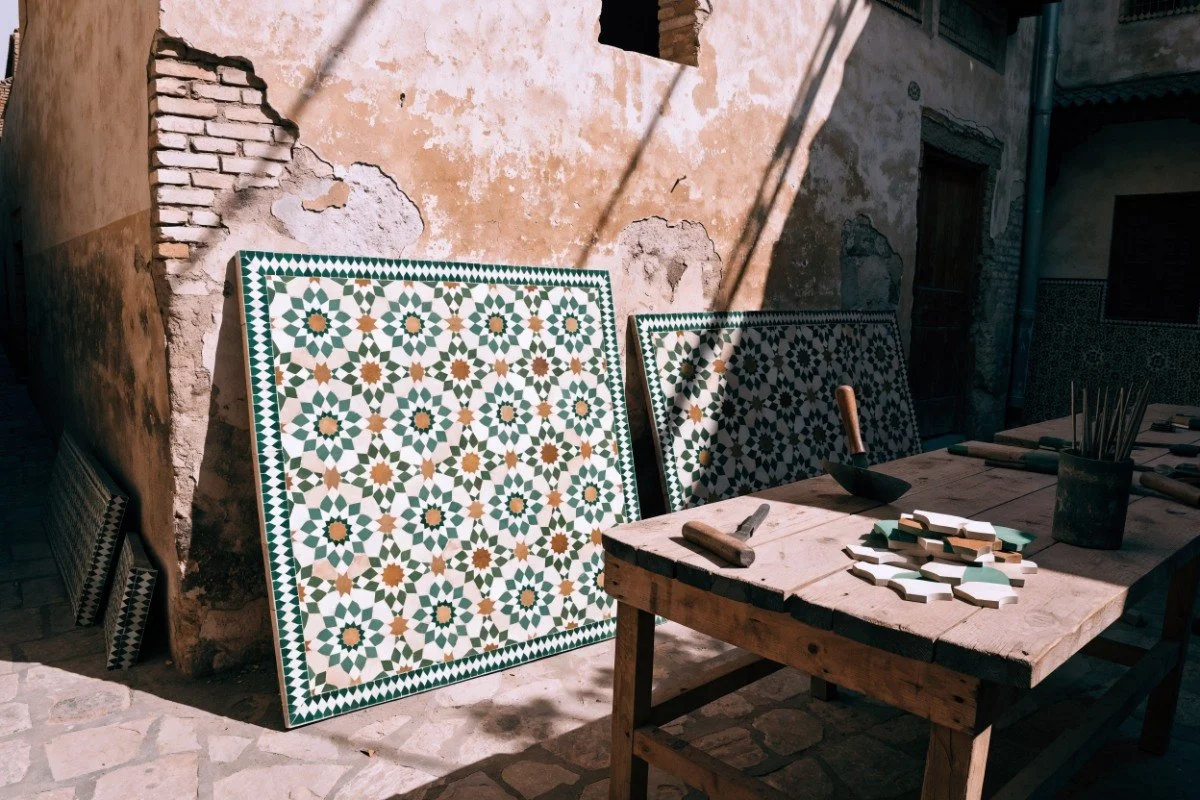
This is where a good route slows down on purpose, because Fes rewards depth rather than coverage. Artisan workshops where you watch zellige tile mosaics assembled from memory, bronze workers, weavers. The world's oldest continuously operating university at the medina's heart. A dinner in a riad, the traditional courtyard house, that will quietly recalibrate your standards for where dinner happens. On the way in, the route detours through Volubilis, where Roman mosaics still lie open under Moroccan sky, and through imperial Meknes.
Should you fly from Fes to Marrakech, or drive?
Drive, and stay awake for it. The crossing takes a day, and it is the day that stitches the two halves of the trip together in a way no flight can.
The road climbs through the cedar forests of the Middle Atlas, passes Ifrane, the improbable alpine town nicknamed Morocco's Switzerland, and then opens onto widening plains as the light turns southern. You watch the country change through the window. Flying over it saves hours and costs you the sense of how far you have actually come.
What is Marrakech actually like?
Morocco with the saturation turned up. The pink city, the carnival of Jemaa el-Fnaa at dusk, snake charmers and storytellers and a hundred grills sending up smoke, the organized chaos of the souks, and the painted ceilings of the Bahia Palace as the calm counterweight.
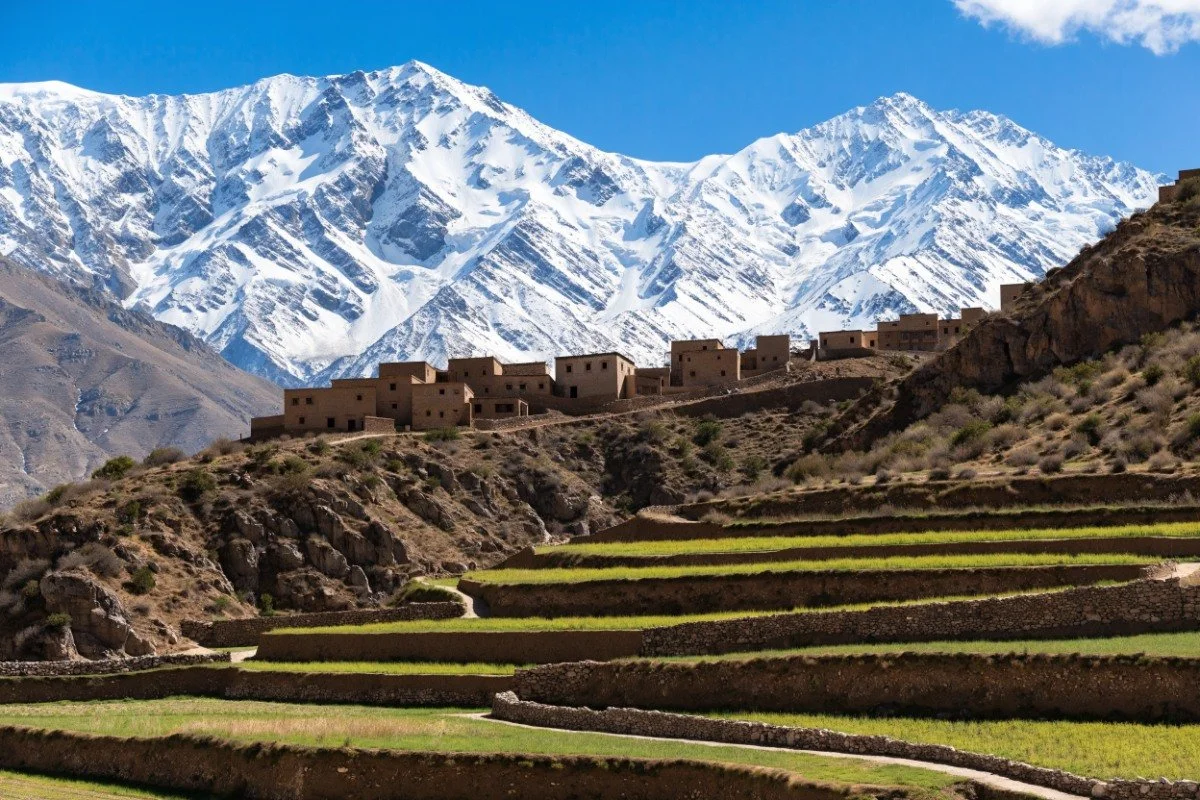
A day here is hands-on: a cooking class, a women's weaving cooperative, the hammam. Then the route's final grace note, a day up in the Atlas Mountains among Berber villages, where a women's cooperative hosts you and the High Atlas stands snow-capped over the valley. Then home, twelve days and roughly a thousand years after you landed.
Does the order of the cities matter?
More than almost anything else about the trip. Coast before mountains, modern before medieval, one deep-end city and one crescendo city with breathing room between them, and the hardest travel day placed mid-trip while your legs are still in it.
That is what itinerary craft looks like, and it is completely invisible until you travel a route built without it. Ours is built with it. Our twelve-day Morocco journey runs March 30 to April 10, 2027, as a small group of women, with the riads, the cooperatives and the hammam all arranged and every one of those thousand decisions already made. Booking closes January 15, 2027.
If the wardrobe question is the one circling, we answered it separately in what to wear in Morocco. Everything else is what the free call is for.
